The idea of building our own Cloud at dataforest isn't new. It has existed for over nine years, back then still under the name PHP-Friends. It was born after a long night when a host system had gone down. In that moment, Tim Lauderbach (Timmi for short) and I realized how valuable a Cloud would be that makes customers independent of individual hardware. We had big ambitions, but not the capacity. So the idea stayed just that - one that came up in every other conversation between Timmi and me, but never made it past a few loose experiments.
Things looked different in early 2025, when I returned to dataforest with a lot more knowledge and experience. The development team at that point consisted of two people: Marc and me, along with an empty repository and a long list of things our Cloud should one day be able to do. When I told Marc about my vision, he could barely imagine the two of us pulling it off anytime soon. I felt the same way. But at some point you just have to start - and the focus for the start was clear: Cloud servers that can be created as easily and quickly as possible. Everything as self-service, no ticket, no phone call.
Early on, we had to make a choice: do we try to cover as much as possible with the Cloud from day one, or do we focus on a few things and do them right? In hindsight, the focus wasn't just pragmatic, it was a real advantage: the Cloud now grows based on what customers actually need, rather than on assumptions.
What was barely visible from the outside: before a single line of product code could be written, the entire foundation had to be in place. Monitoring, CI/CD, automated testing, security concepts - dataforest had never professionally built software projects of this scale in-house before. This foundation alone took a significant amount of time.
At some point during this phase, I was sitting at Timmi's dining table. We were thinking about what to call our Cloud servers. "We are dataforest," I said, "they can't just be called VMs or VPS." Timmi nodded. A brief silence. "How about Seeds?"
The Team Grows
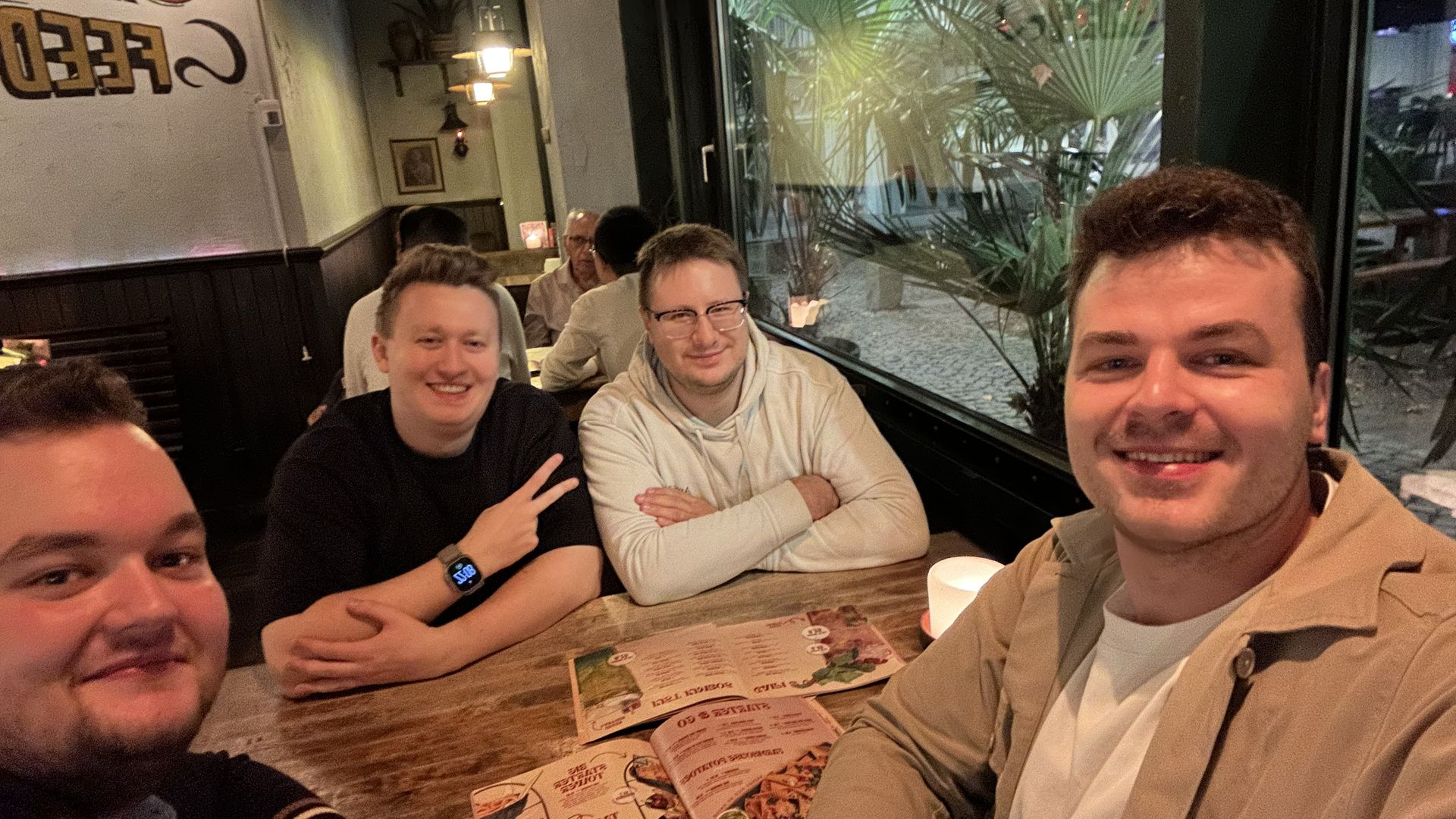 Essen, October 2025 - Timmi, Marc, Leon and me after a long day working on the Cloud.
After Marc, Merle and Leon joined, many other colleagues supported us on specific topics over the following months. But Cloud and hosting are so vast that every new team member needs time to find their footing in the subject matter first. I had underestimated that.
The same was true for the interface design. We decided early on to approach UX professionally with Klickmeister. Finn, who became our mastermind for UX, had exactly the right approach for our challenge: translating very abstract, technical concepts into an interface that feels intuitive.
With the growing team also came the urge to always add just one more thing. The more people sit at the table, the more often you hear "we could squeeze that in too." A lot of it would have made sense. But every feature brings far more than just the code you write for it: it needs to be tested, maintained, and secured, it increases architectural complexity, and it expands the attack surface. What you see is the tip of the iceberg - what lies beneath stays with you permanently. And especially with a Cloud that customers trust with their infrastructure, stability comes before feature count. So I said no consistently, even when the arguments for it were good. A good example is our onboarding: we had developed a sophisticated flow for new customers, step by step through the Cloud, payment method, billing address, first Seed. Conceptually clean, beautifully designed. In practice, though, it didn't work, not reliably enough, not good enough. At some point I removed it entirely and replaced it with a simple modal. So far, every customer seems to have managed just fine. One day the onboarding will come back, but done right.
November
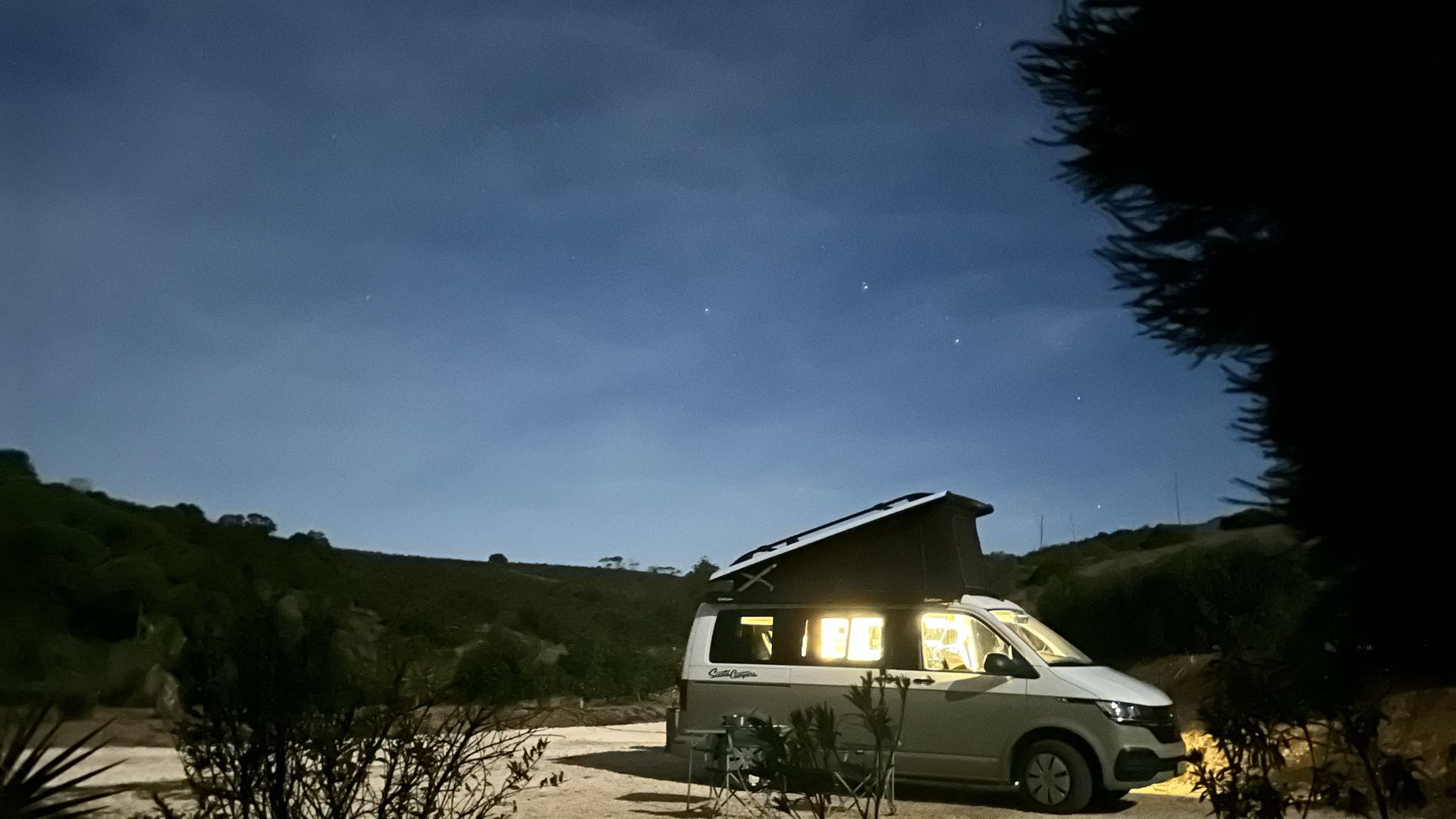
Our release date was November 28, 2025. Until then, features had been flowing into the Cloud from everywhere, including the Algarve.
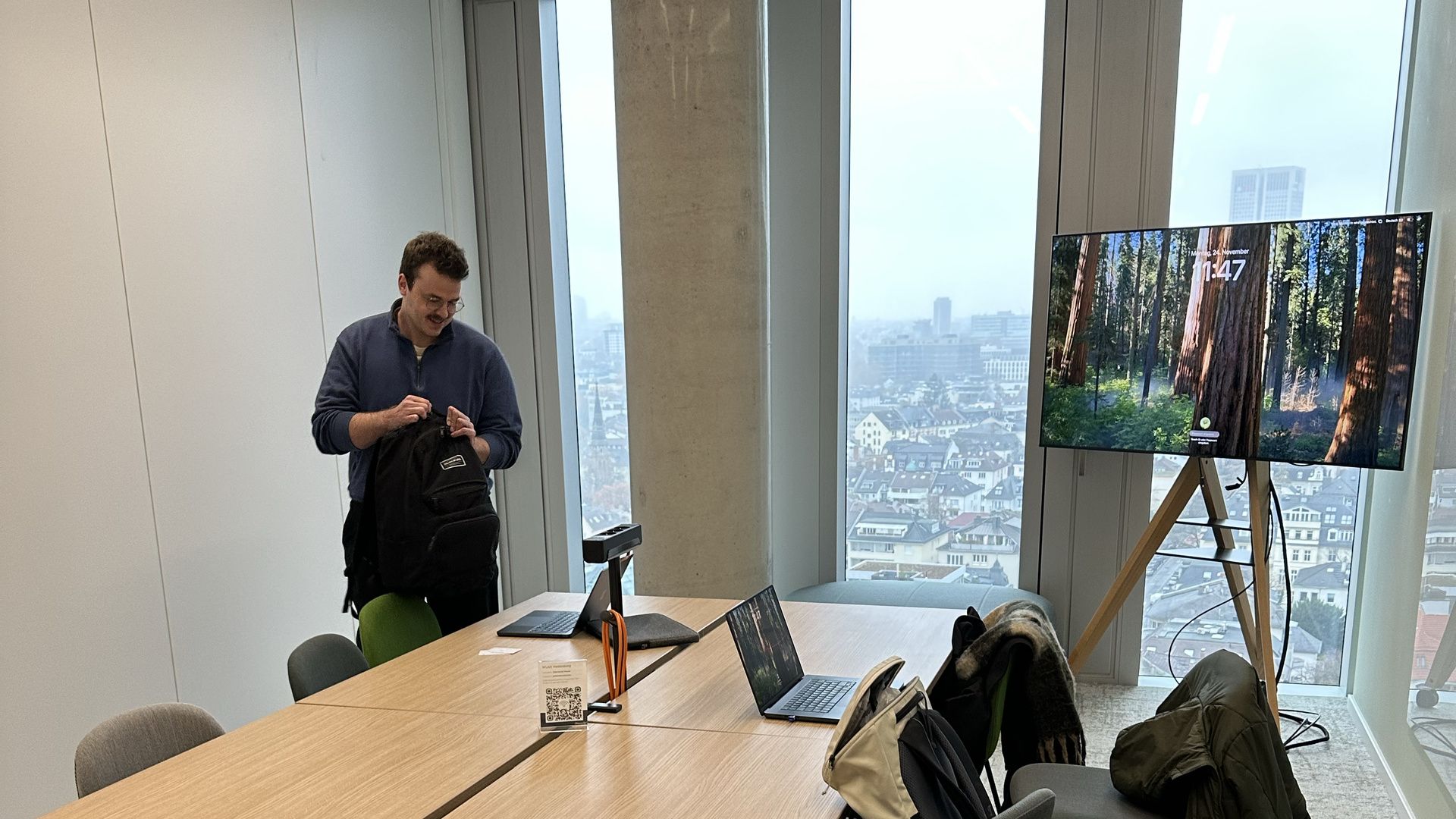 Frankfurt, November 2025 - before the rest of the team arrives.
For the final sprint before release, everyone met for a week in Frankfurt: both Tims, Jens, Merle, Marc, Leon, and me. All in one room, with one clear goal.
The plan was for our colleague Florian to be one of the first to go through the Cloud in a blind test. Someone who wasn't involved in development and could evaluate the whole thing with real user eyes. "Florian can test next week," they said at the beginning of the week. Then again at the end. And the following week once more. It became a running joke within the team, and at the same time the most honest indicator of where we actually stood.
Because the closer we looked together, the more we noticed. I remember the form where customers order their Seeds, for example. You could select how many you wanted to create, depending on your account limits, and even that didn't work properly. And that's how it goes: you look at one thing more closely, find the next issue, and then another. It wasn't one big problem, but many things that were at 80% instead of 100%.
At some point it became clear to us: we could launch on November 28 - but not at the quality we had envisioned. And releasing a Cloud that customers trust with their infrastructure half-finished was simply not an option. It was less of a tough decision and more of a realization that had been building throughout the week and could no longer be ignored.
So we had to push through again. All of December, through Christmas, through New Year's Eve. On January 9, 2026, the dataforest Cloud went live. Florian was finally able to test before the launch, too.
Since Then
You always imagine a release day to be exciting. The night before, I couldn't sleep properly, I was up at four in the morning, preparing everything, going through every step one more time. And then the moment itself: one button press, test again, everything works. After months of preparation, the actual launch was almost anticlimactic.
All the pressure drops away at once, and you're standing there thinking "okay, it's live - now what?". After such a long, intense period of working on a single thing, I had to find my bearings again first.
A few months later, I can say: we pulled it off. The Cloud is running and the feedback shows us that customers appreciate the quality.
Thanks to everyone who uses our Cloud and gives us such open feedback. We have a lot more ahead of us - but if there's one thing we've taken away from November, it's this: we want to promise less and deliver more. That's why there won't be a public roadmap or concrete announcements about upcoming features from us. Instead, we want to regularly surprise you with additions that are finished, tested, and thought through. Our changelog shows what we deliver - not what we plan.